
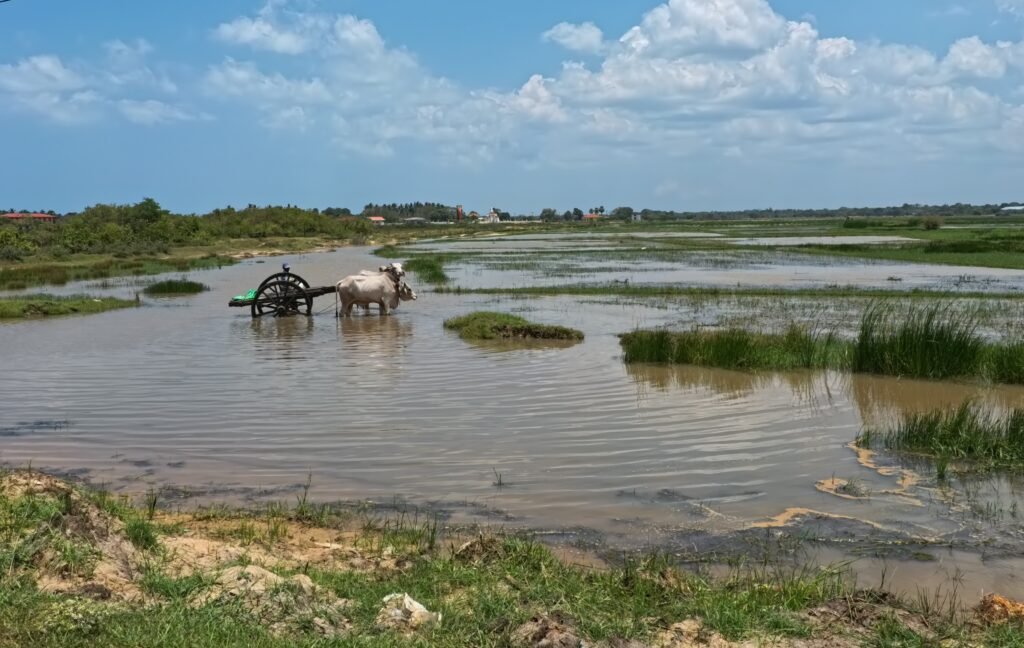
I wanted to see more of Sri Lanka’s East Coast. The handwritten note Rasika had given me in Galle was still with me, with several places he thought I should visit. Gem River Edge had been the first stop on his list. What was meant to be a brief stay had already stretched into several days.
My flight home was on 4 May, but the days in between were still open. There was no real itinerary for the East Coast.
At some point, I must have asked Muna for suggestions. The idea was to travel along the coast for a few days, discover places I didn’t know yet, and perhaps gather ideas for future journeys I could one day organize for small groups.
He had a different idea.
Instead of telling me where to go, he decided to take me himself.
So, on 22 April, we left Gem River Edge together.
Our first destination was the home of Muna’s friend Anusha, where we would spend the next two days. By the time we arrived, the light was already fading. I could make out the house among the tropical vegetation, but little more. The ocean was somewhere beyond it.
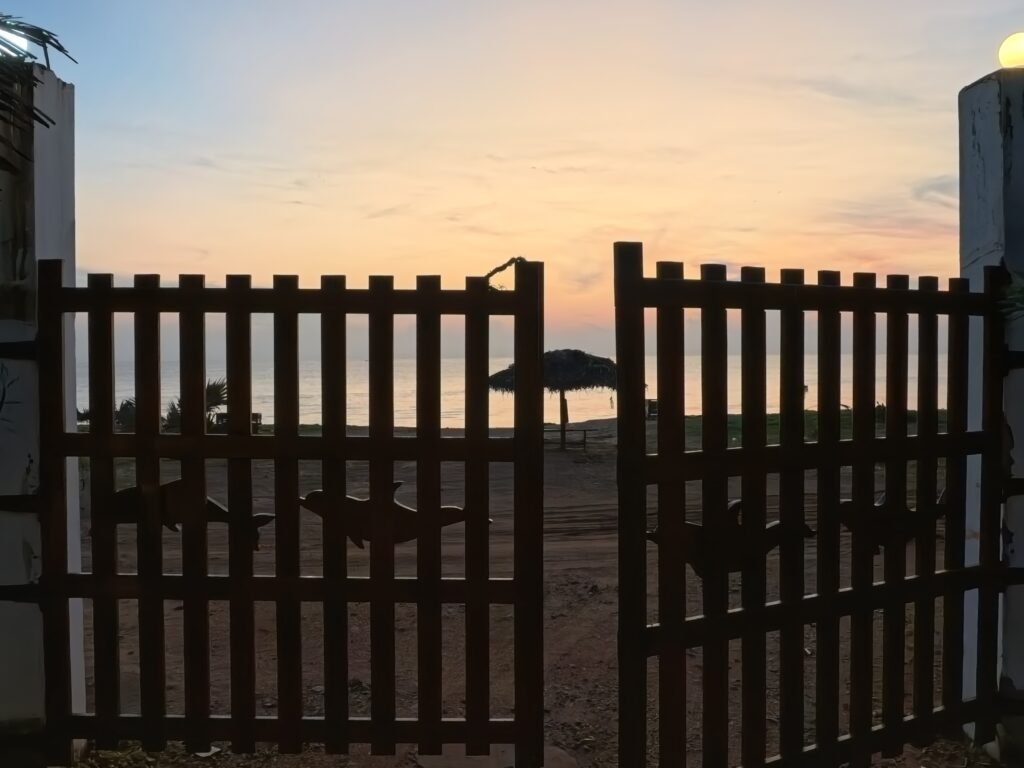
Where We Had Arrived
The next morning, I finally saw where we had arrived.
Anusha wasn’t there. She was in Paris, and we had spoken on the phone the evening before. Almost immediately, she had asked me if I could take some photographs of the property the next morning for a retreat project she was developing there.
So, my first morning on the East Coast began with a small assignment.
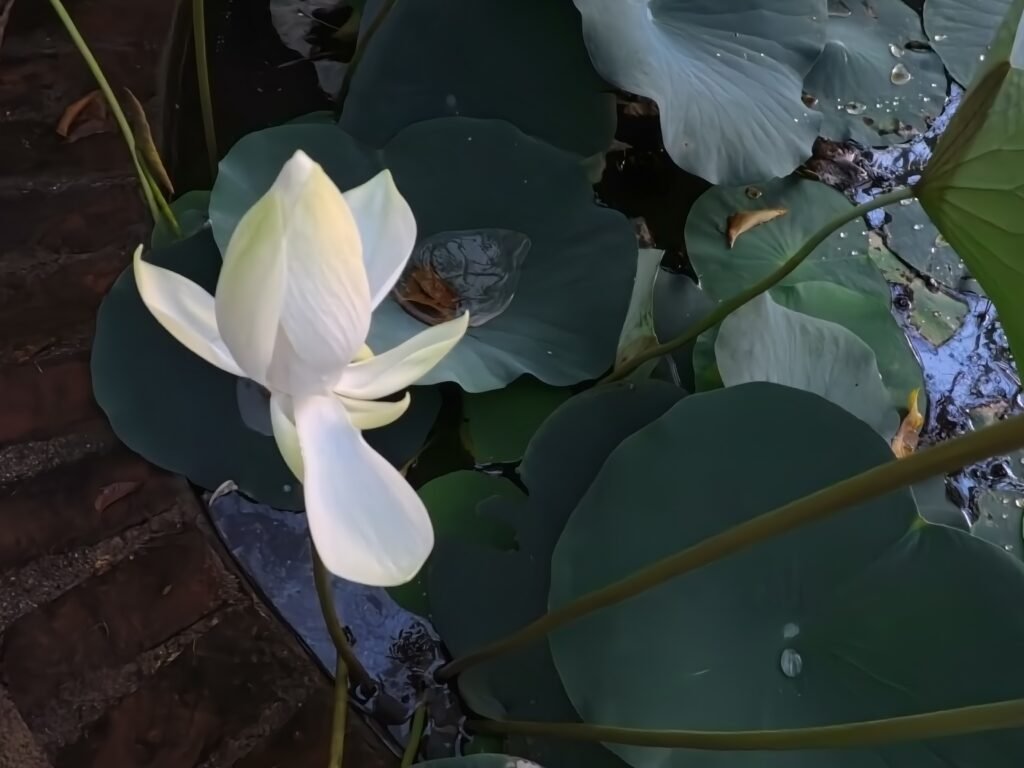
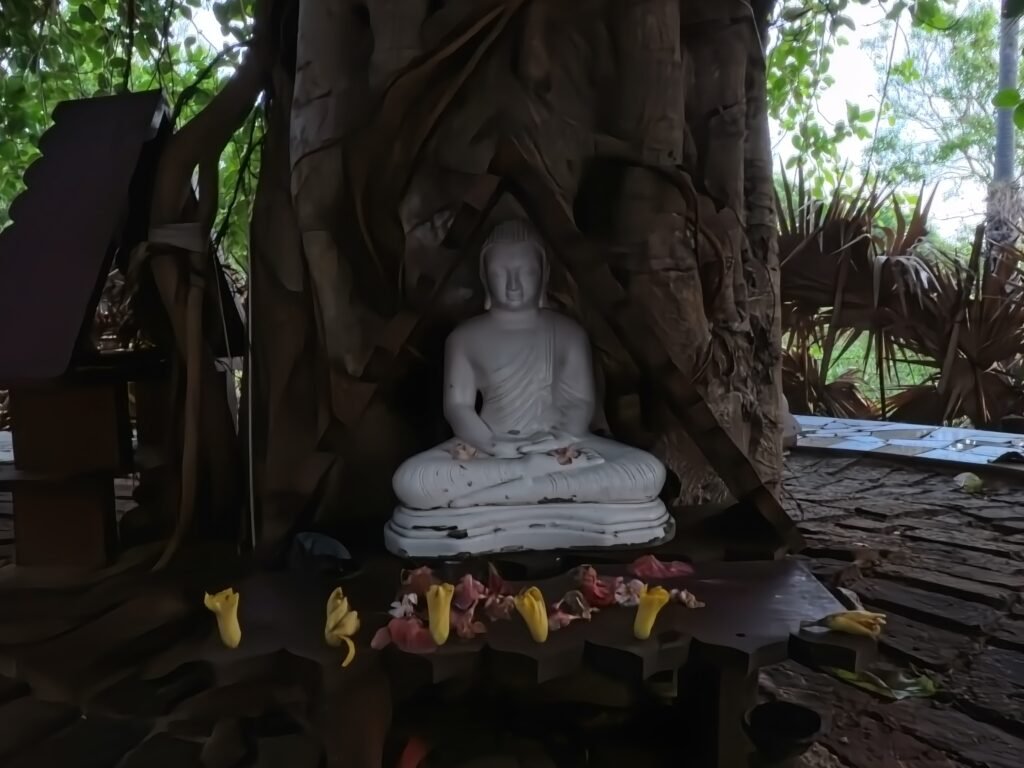
Camera in hand, I walked around the property: a house almost hidden in tropical greenery, a lotus pond and, beneath a large tree beside it, a small white Buddha. The ocean lay just beyond the garden.
A few steps away was another large garden. Paths wound through palms, flowering plants, and dense vegetation. Hidden among them stood a small open shrine, where images and statues from different spiritual traditions shared the same altar.
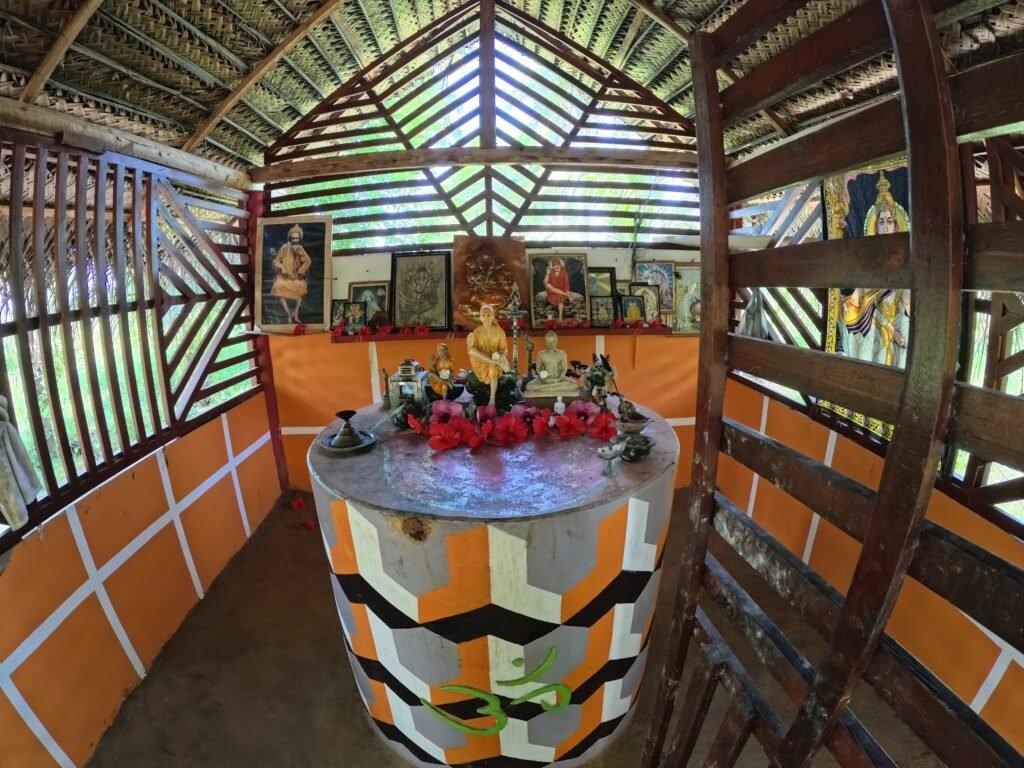
Even from a distance, Anusha came across as a woman who knew exactly what she wanted. Perhaps some of that determination ran in the family.
Her uncle, Muthukumaru Sooriyakumar — known as Sooriya Kumar — was born in Sri Lanka and eventually made his home in Hawaii. A renowned copper artist, he founded Mouna Farm Arts & Cultural Village, bringing together art, community and spiritual practice. In 2016, he was honored as a Living Treasure of Hawai‘i.
His story had begun much closer to where I was standing. In the early 1980s, Sooriya had lived around Arugam Bay, before the civil war changed the course of his life.
Once my photographic assignment was over, we had nowhere else to be.
At some point we went to look at a few properties for sale nearby. The idea of creating a retreat of my own was already in the back of my mind, so I couldn’t help looking at the land differently. Would I like to stay here? Could something be created here?
Later in the afternoon, Muna and I went for a walk along the beach. The sky was growing darker over the ocean. Fishing boats were pulled up on the sand, and the beach was deserted. Two dogs joined us. Nobody had invited them. They appeared and decided that they were coming too.
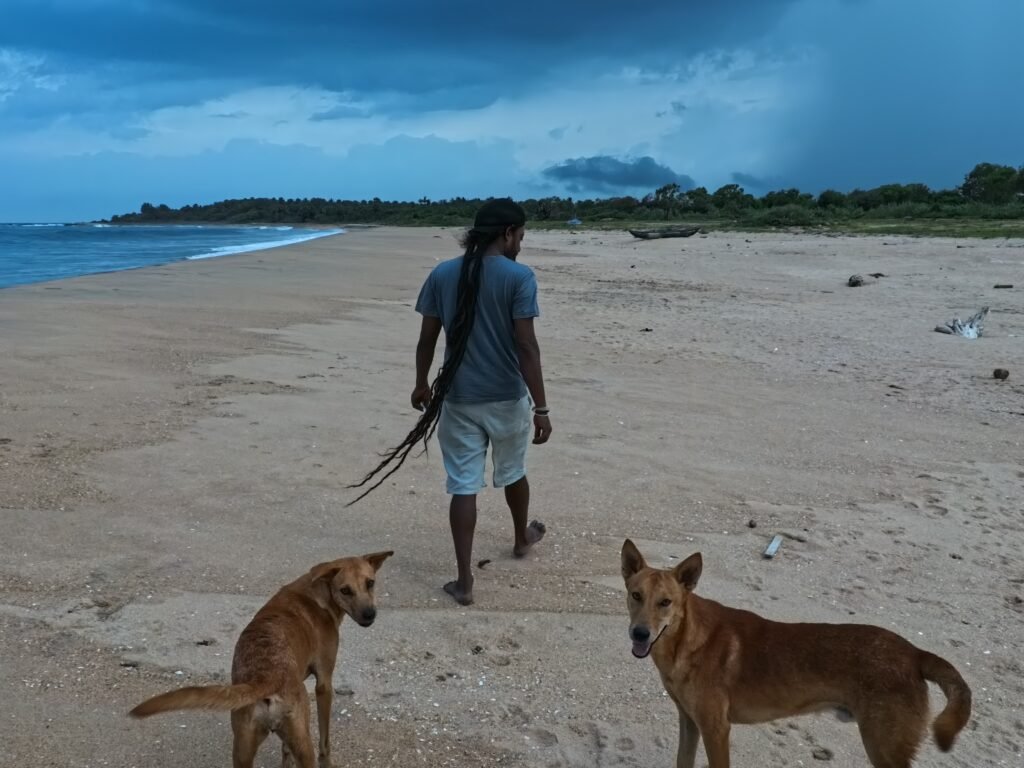
Muna walked ahead, occasionally bending down to examine something the sea had washed ashore. Pieces of wood, dark fragments, things I would probably have passed without noticing. He was collecting material for a sculpture he wanted to make in front of Anusha’s house.
I liked watching him choose.
We walked for a long time. Above us, the clouds grew heavier. Then the rain came.
Towards Okanda
The next morning, we set off early, heading south along the coast. Before going far, we stopped for breakfast at a small Muslim-run place along the road. A hand-painted sign advertised fresh cow’s milk, and we ate hoppers — bowl-shaped rice pancakes, crisp around the edges — and string hoppers, delicate nests of steamed rice noodles. They reminded me of another rice-based breakfast, thousands of kilometres away: the idli I had discovered in Varanasi — supposedly the best in town.
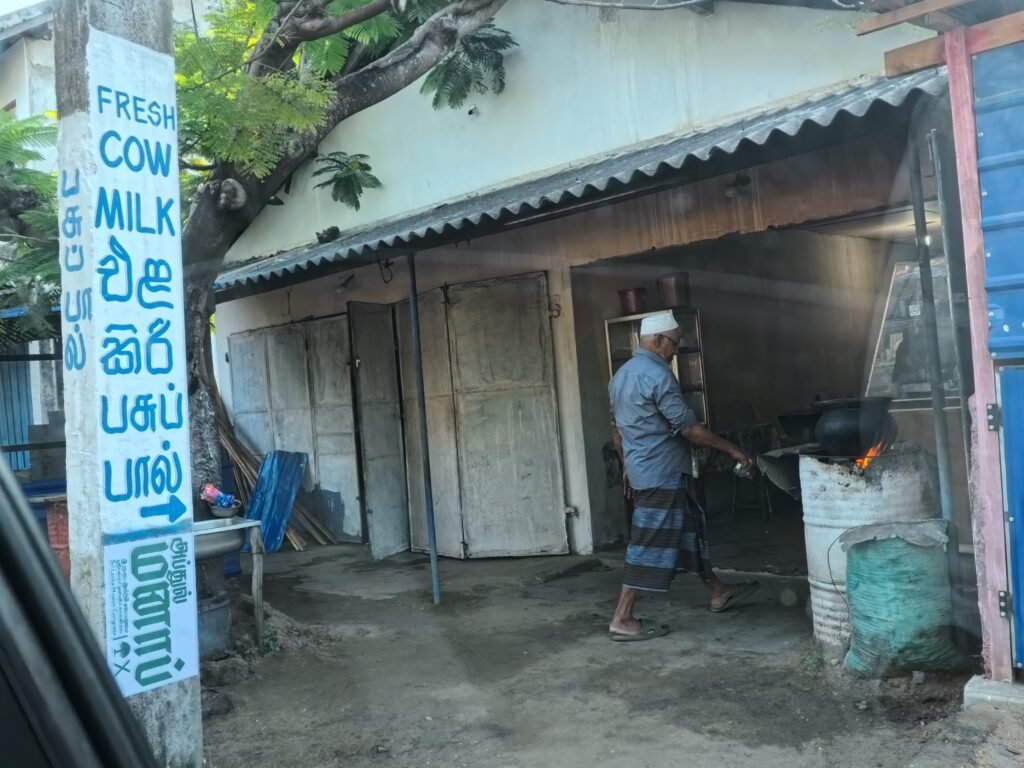
This part of the East Coast is home to large Muslim communities. In the small towns we passed through, men seemed to be everywhere — behind shop counters, in cafés, along the road — while women were far less visible.
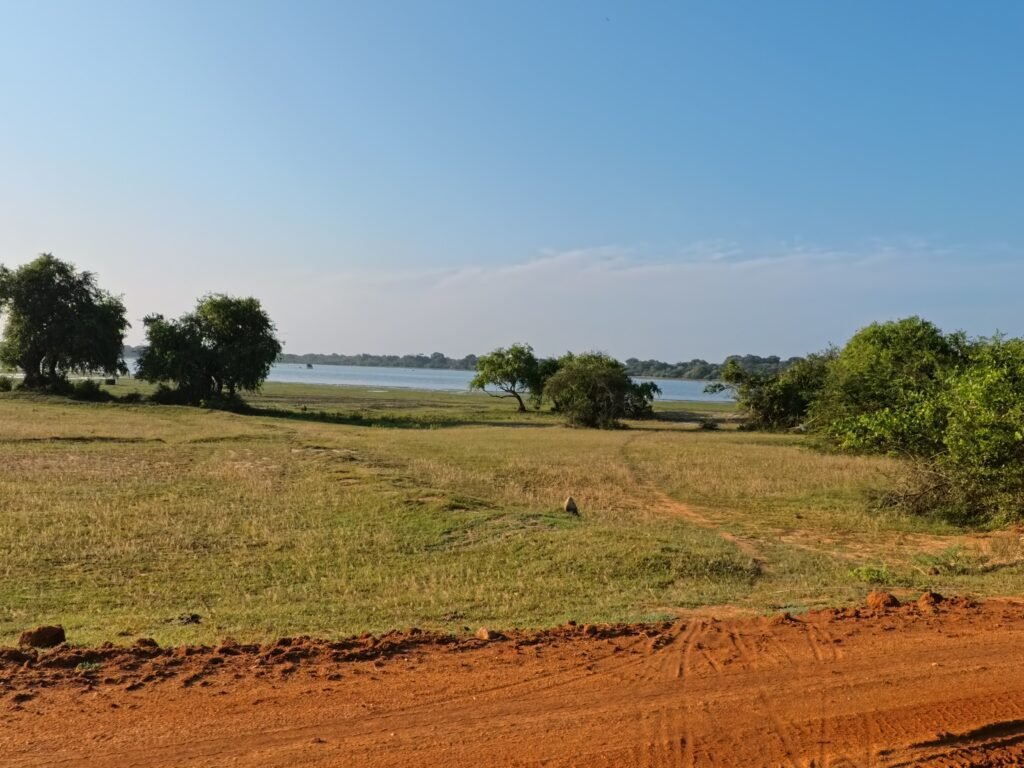
We continued south along the edge of a lagoon. The road became quieter, the landscape more open and wild.
Just before entering Okanda Devalaya, we stopped beneath a huge banyan tree. A troop of monkeys had gathered there, completely at ease in the shade.
It was here that the journey connected with something Muna had been telling me about almost from the moment we met: the Patha Yathra. At Gem River Edge, he had given me a book about the pilgrimage — the long walk down Sri Lanka’s eastern coast to Kataragama.
Okanda is one of the important stops along the Pada Yatra. Pilgrims coming from the north and east gather here before continuing south, through stretches of forest and wilderness, towards Kataragama, the great pilgrimage sanctuary associated with Skanda, or Murugan.
Inside, Muna moved quietly through the temple while I lingered over the details.
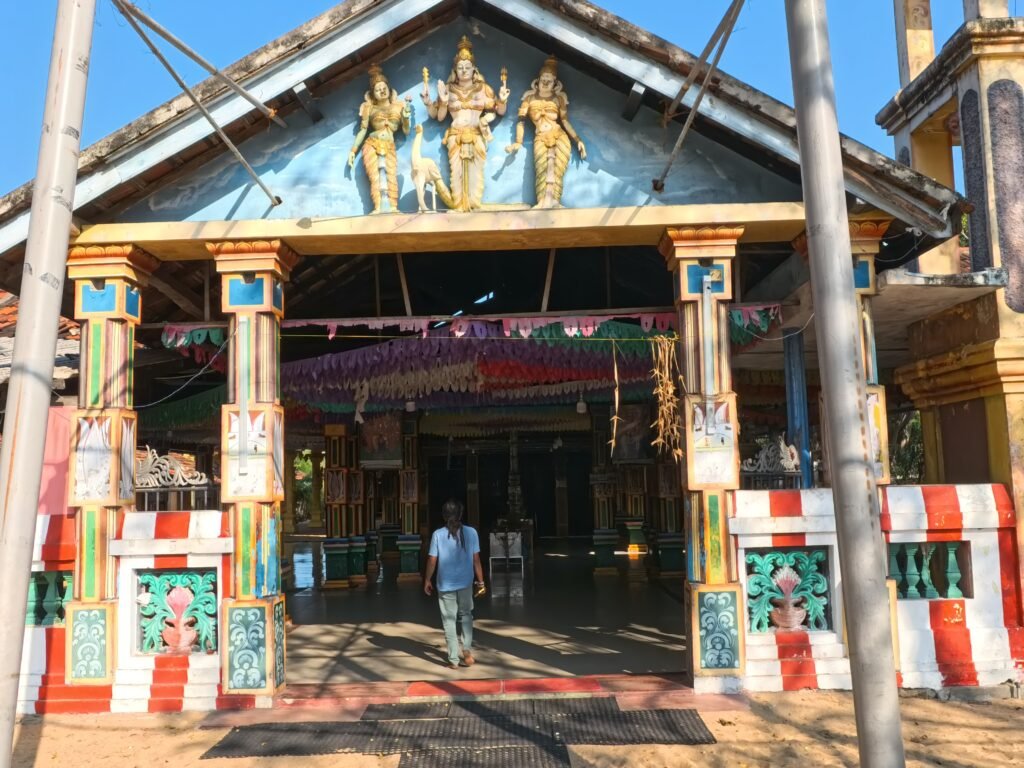
The temple was full of colour: painted columns and small shrines crowded with images of gods. And everywhere, there were snakes.
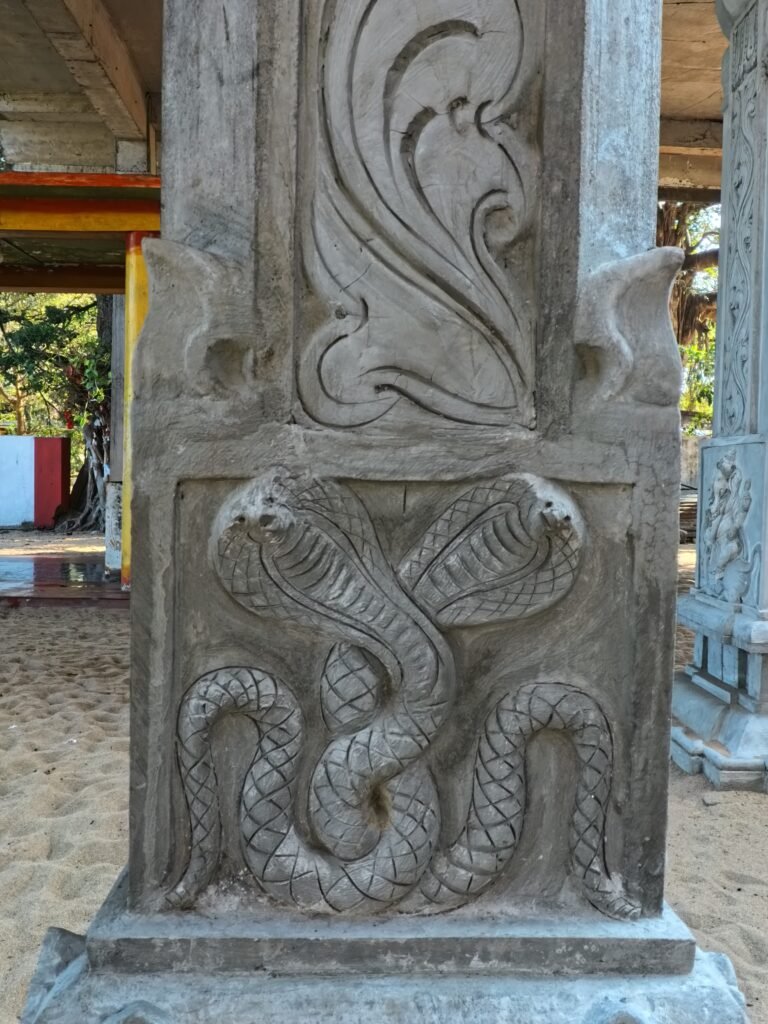
Cobras faced each other on the columns. Others rose from the architecture, their hoods open. In one shrine, Vishnu rested on the coils of the cosmic serpent. Once I began noticing them, they seemed to appear everywhere I looked.
Serpent imagery has deep roots in the religious traditions of South Asia, where nāgas are associated with water, fertility and protection.
While I wandered from one detail to another, Muna sat down on the floor.
In every sacred place we visited, he moved with the same quiet dignity and deep devotion.
One altar in particular, flanked by two rising cobras, held my attention. Standing before it, I felt something almost physical, a force I couldn’t quite explain.
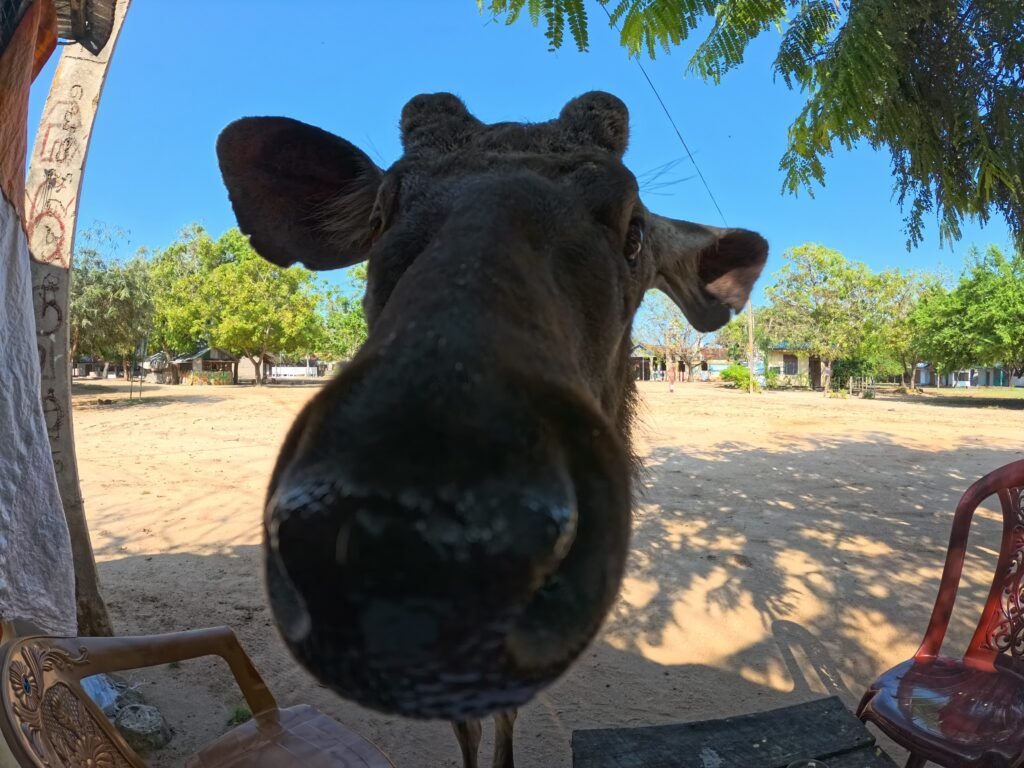
After Okanda, we stopped for tea. We were sitting outside when a young sambar deer came up to Muna, who seemed completely unsurprised. A moment later, an enormous, curious face was almost inside my camera lens.
Kudumbigala
From there, we continued towards Kudumbigala, passing through Kumana National Park, a vast protected wilderness of lagoons, wetlands and forest on Sri Lanka’s southeastern coast.
Our destination was Kudumbigala, an ancient Buddhist monastic complex built among massive rocky outcrops. It was special to Muna.
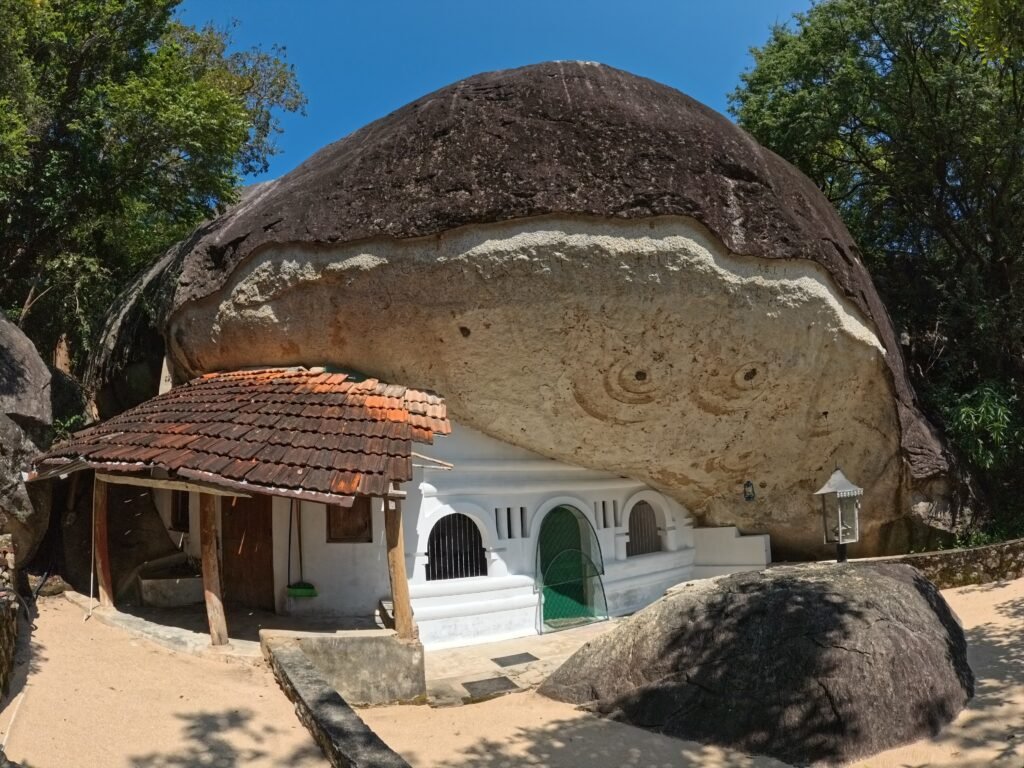
From the lower buildings, we began the long walk up through the monastery. The path wound between enormous rocks and trees, passing small temples and shrines along the way. One rock made me stop. Beneath the overhang, two circular marks looked uncannily like a pair of eyes.
As often happened with Muna, doors seemed to open around him. There was something in the way he approached people. Higher up, we met one of the monks. He took us into the dining hall, where a long table had already been prepared, with plates of food and fruit. Muna added the bananas he had carried all the way up.
The monk then led us into another room, where books filled the shelves, and an altar with images of the Buddha stood at one end.
Outside, we sat in the shade with a group of devotees dressed in white.
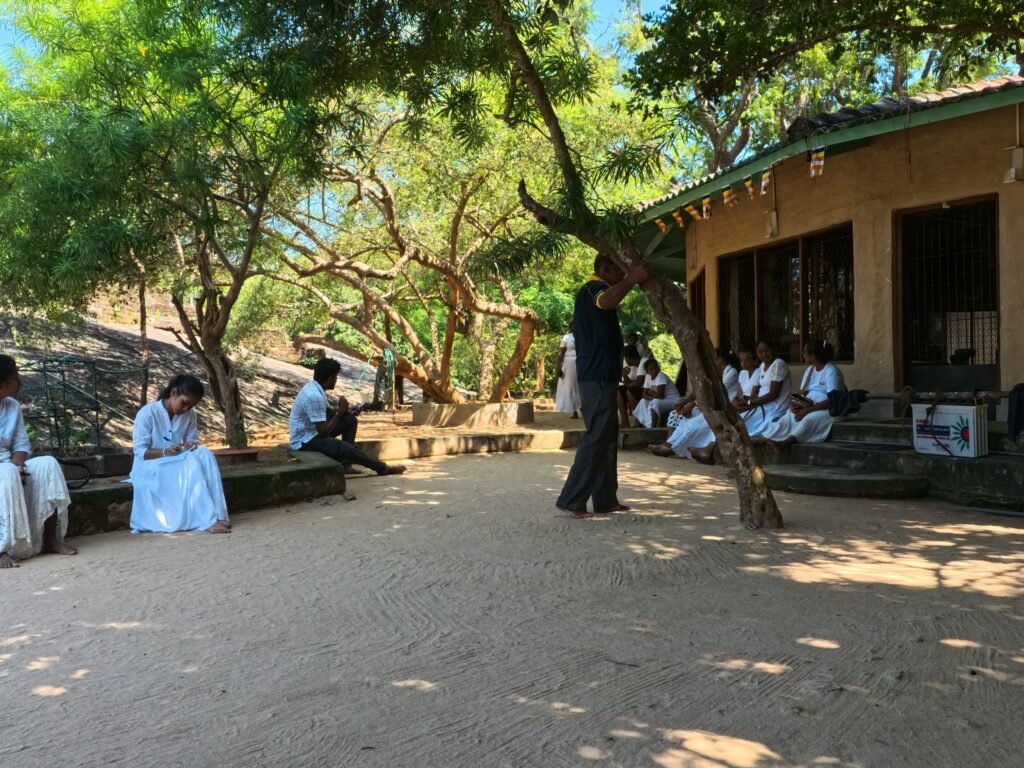
Eventually, we emerged from the trees onto the bare rock. An old brick stupa stood above a vast green landscape.
Muna found a patch of shade beneath a tree and lay down.
On the way back, we stopped in Arugam Bay to see Saman, an old friend of Muna’s from his youth. We met at Saman’s eco-hotel, and he seemed rough-edged. The civil war was never very far away in this part of Sri Lanka, and Saman, too, had been marked by it.
That evening, back at Anusha’s house, Muna and I talked for a long time on the balcony. As he spoke about his life, his features seemed to change. At times, he looked almost like a different person.
I didn’t know what to make of it.
By the following afternoon, we were on the road back to Gem River Edge. Cattle grazed across the open grassland; beyond them were stretches of wetland and a lagoon under a wide sky. We passed through small settlements and back onto roads where signs warned drivers to slow down for crossing wildlife.
By the end of the day, we were back at Gem River Edge.
Three days earlier, I had asked Muna where I should go. Instead, he had just come with me.