
Without Transition
I arrived in Sri Lanka almost without transition.
Just hours before, I was still in Rishikesh — inside a completely different rhythm of life. From there, a five-hour drive to Delhi, an early morning flight, and then, suddenly, the island.
Everything happened quickly. Almost too quickly for the mind to follow.
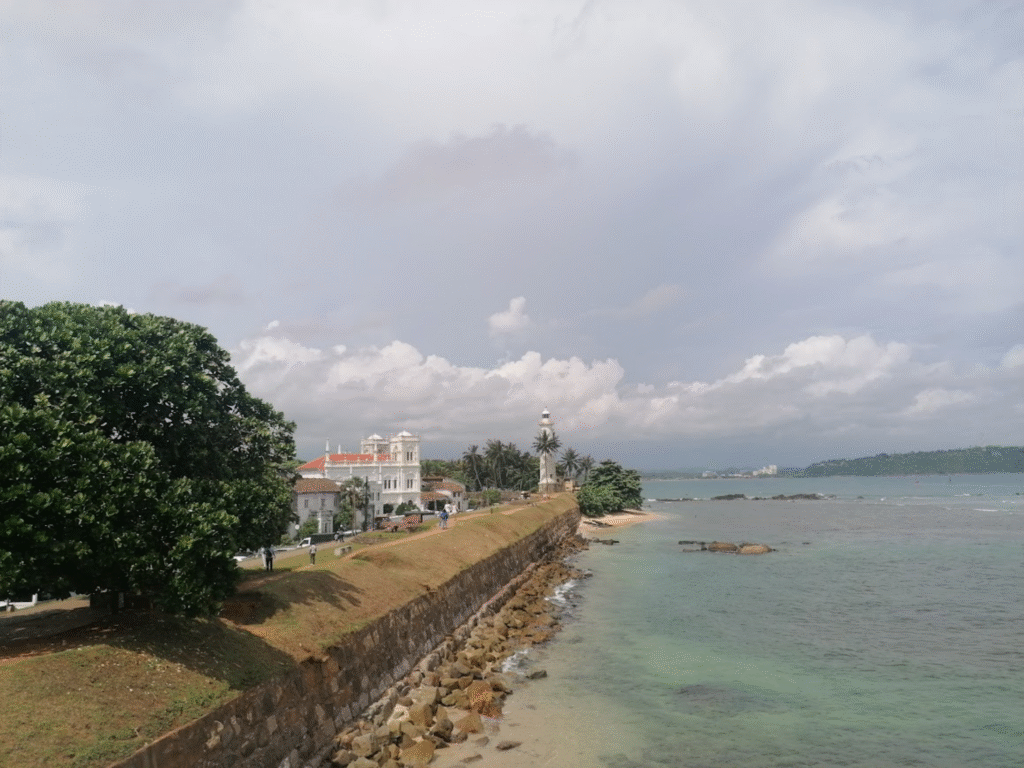
Something in me did not fully enter the scene. It didn’t seem necessary. Sri Lanka — often called the “tear of India” — received me with an unexpected sense of ease.
The airport was quiet, and the road to Galle Fort was smooth and nearly empty. After months in India, this alone felt unusual.
What struck me more was something simpler: order. Not the rigid kind, but a soft, almost invisible structure in the way space was arranged, in the cleanliness, in the absence of tension. It was as if the environment itself was not asking anything from me.
For the first time in weeks, the body relaxed before the mind could understand why.
I stayed in a small villa within walking distance of the old town. A quiet garden, filtered light, a sense of containment. Without planning it, I extended my stay. What was supposed to be two or three days became five.
There wasn’t much to do, and nothing to resist.
A Beautiful Surface
The next morning, I walked into the old city.
Galle Fort is often described as a colonial town on Sri Lanka’s south coast, with Portuguese origins, later shaped by the Dutch and the British. All of that is visible: the white facades, the wooden shutters, the grid of narrow streets, the bastions facing the ocean.
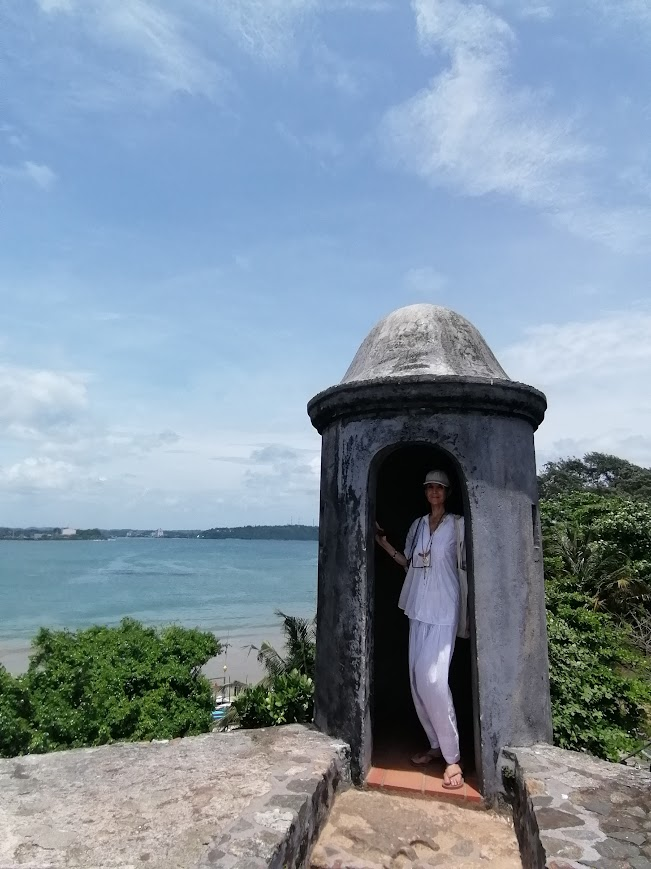
It is undeniably beautiful. Almost too composed.
You walk along the walls, the ocean breaking below, rooftops stretching into the distance, bougainvillea falling over balconies. Cafés, small boutiques, curated interiors. Everything seems to be in place.
Something in me remained slightly at a distance.
A sort of resistance, or maybe a quiet awareness — not the depth of the island yet, just an introduction.
The real shift happened almost accidentally.
A Small Opening
I went looking for a small place mentioned in passing — the Old Railway Café. It was closed. Instead, I found a workshop on the ground floor: women sitting at sewing machines, fabrics laid out on long tables, garments hanging on simple racks.
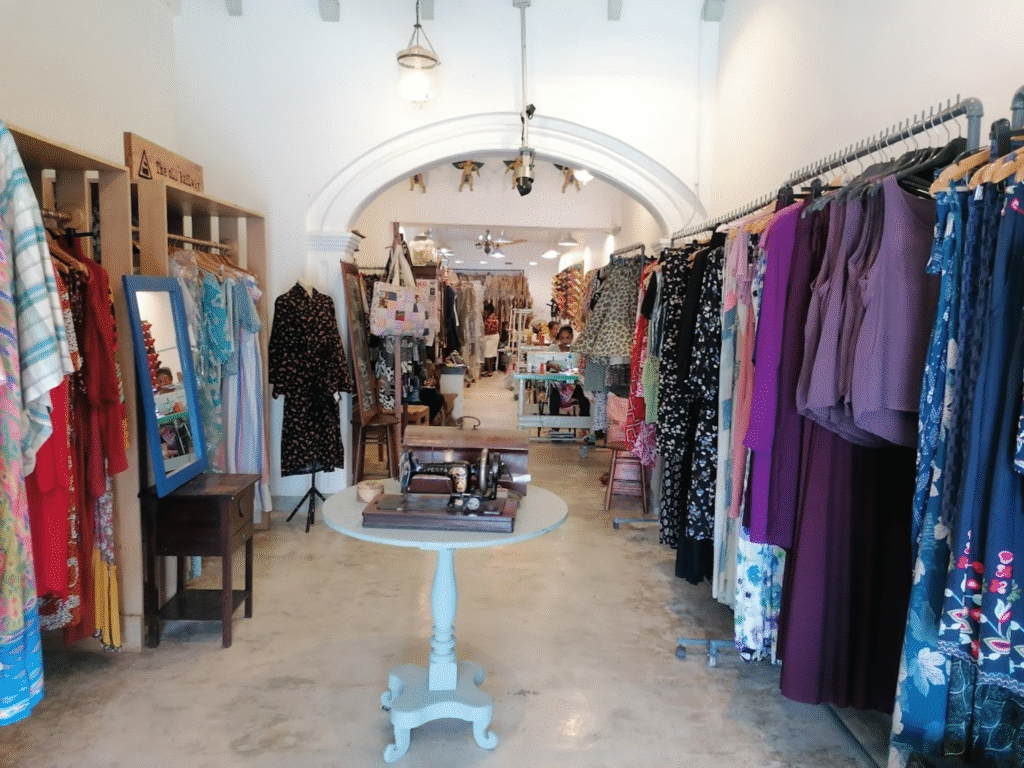
The owner introduced himself as Rasi.
We exchanged a few words. Nothing significant at first. Then, after asking about my plans, he took a piece of paper and, with a calm, deliberate gesture, wrote down a route across the island — places, directions, fragments of a journey I had not yet imagined.
It was precise, structured, thoughtful, and completely unexpected. A little later, he offered to show me a local place for lunch. No insistence, no intention behind it. Just a simple extension of presence.
That afternoon, we rode through the town on his scooter, ate quickly, and spoke little. Something had already shifted. It wasn’t the place, but the absence of a transaction.
Threshold
Looking back, Galle was not a destination.
It was a threshold — a place where the body slows down enough to register the change, where the mind, still carrying the inertia of previous experiences, begins to loosen its grip.
Nothing insists on happening here. Something begins to open.
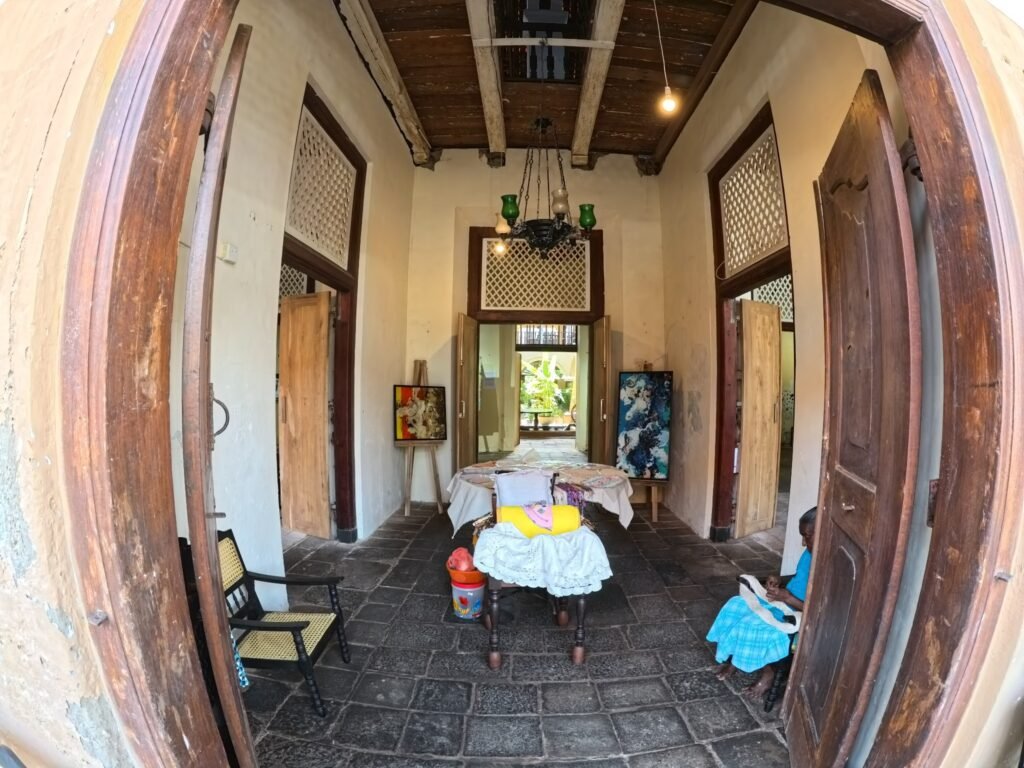
Some places reveal themselves slowly
The island does not reveal itself immediately.
It waits — something I would only begin to understand more deeply later.
And without realizing it, I had already stepped into that waiting.