
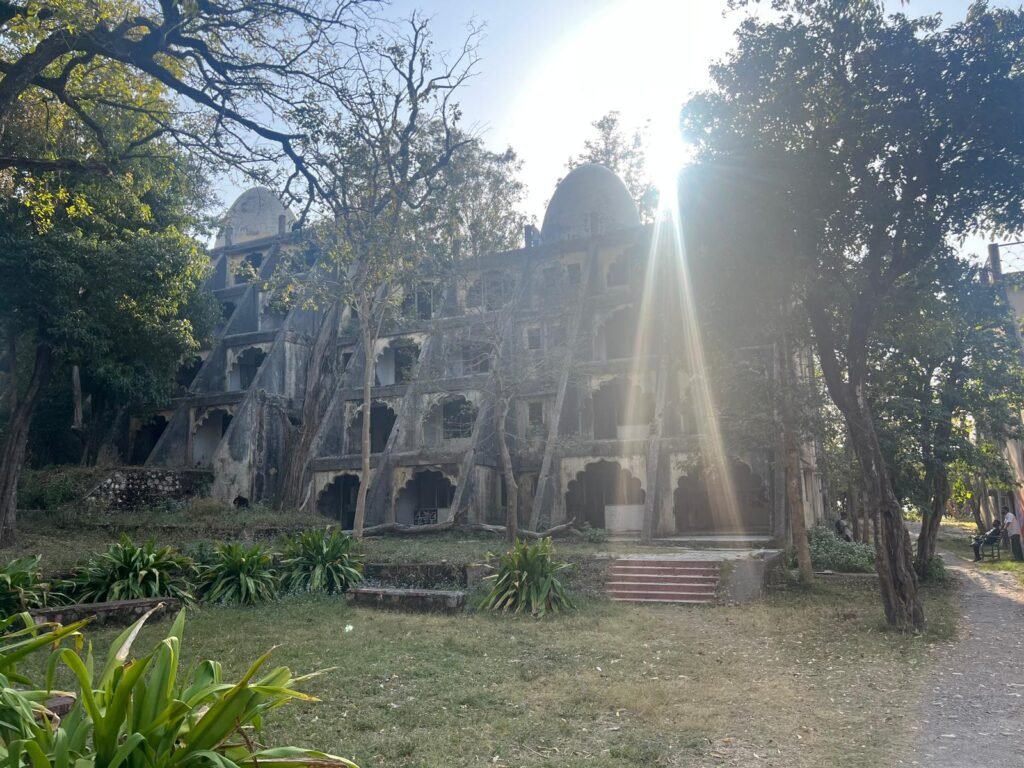
Arrival in Rishikesh
I arrived in Rishikesh — a town stretched along the foothills of the Himalayas in northern India, whose very name echoes the ancient rishis, the Indian sages — for a three-week yoga course, my first intensive training.
It is also home to one of the most iconic and paradoxical spiritual sites in modern travel culture: the Beatles Ashram.
Over the past decades, Rishikesh has acquired the reputation of being the “Yoga Capital of the World.” How much of that image is marketing and how much reflects an authentic continuity of tradition is difficult to determine. Yet serious schools do exist. I found myself in one of them.
India reveals itself in very different ways depending on where you arrive — from the stillness of places like Rishikesh to the slower coastal rhythms I experienced in Gokarna.
This story, however, is about another place — one that long ago crossed India’s borders and entered the global imagination.
The Birth of a Symbol
The ashram of Maharishi Mahesh Yogi, better known as the Beatles Ashram, lies in a secluded area of Rishikesh, close to the banks of the Ganges. In 1968, the members of The Beatles spent several weeks there practicing Transcendental Meditation. During that stay, they composed more than forty songs, many of which later appeared on the “White Album.”
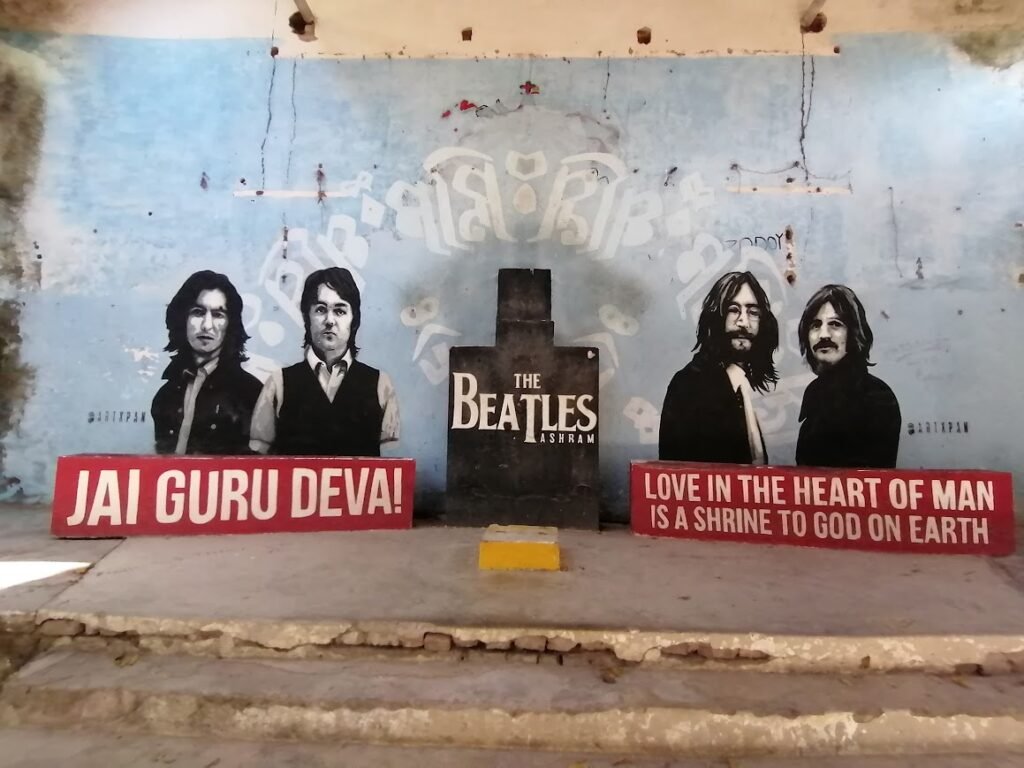
That moment transformed the ashram into a symbol. The East was no longer merely geography; it became a promise — a quiet expectation that somewhere, beyond familiar structures, another way of being might exist.
That same tension between image and lived experience can be felt across India, whether in spiritual centers or coastal towns like Fort Kochi.
From that point on, yoga and meditation began traveling far beyond their original cultural framework. What had once been rooted in a specific spiritual context gradually became global — translated, adapted, and sometimes simplified.
Perhaps the ashram became more of a symbol than a living spiritual center. And symbols, at times, struggle to survive the weight of their own image.
Between Myth and Ruin
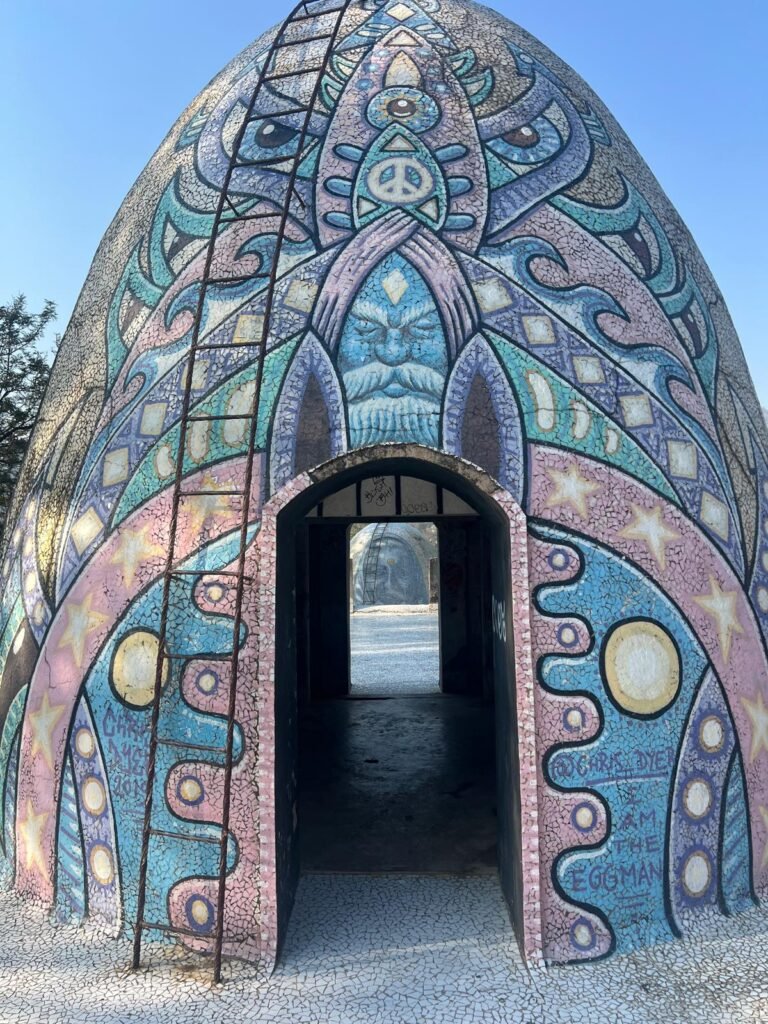
Today, the site forms part of Rajaji National Park. Visitors pay an entrance fee that is surprisingly high by Indian standards. Yet once inside, one encounters meditation domes in decay, paths overtaken by vegetation, and walls covered in graffiti in multiple languages.
This was not a minor retreat. The ashram had been conceived as a structured complex, with numerous residential buildings, communal areas, and even a post office. According to some accounts, there was once a helipad — a detail that was quite remarkable for India in the 1960s.
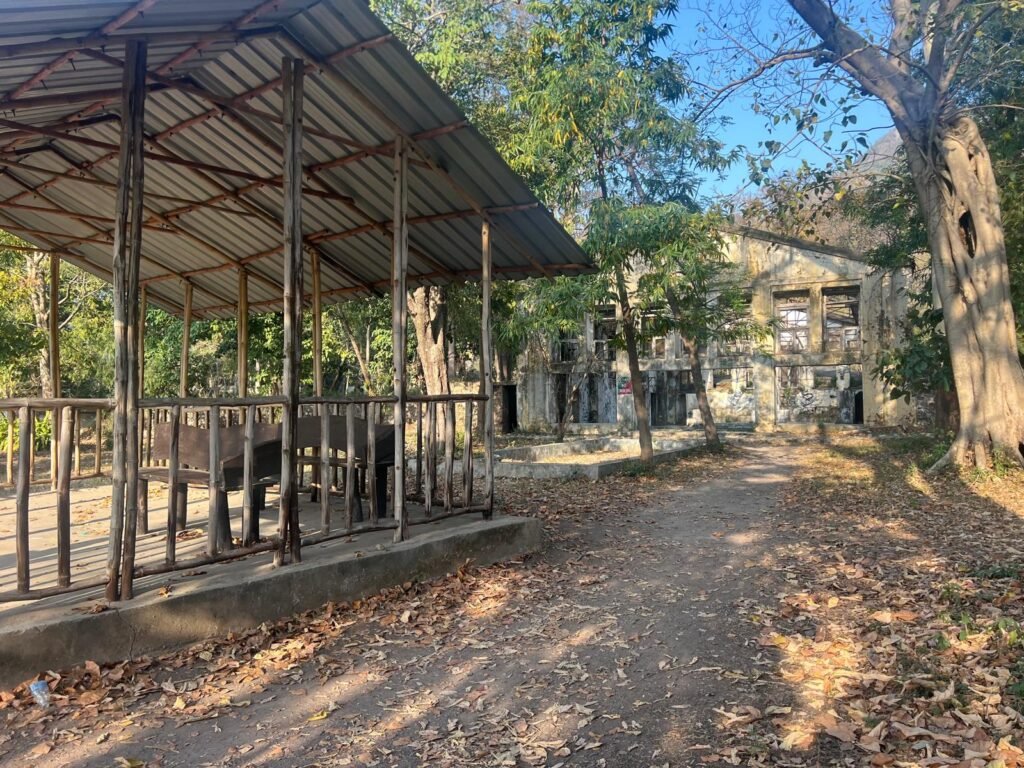
Now the entire compound remains without any real sense of continuity or restoration.
Walking through the buildings, I found myself wondering how a place that had become so emblematic could simply be left behind.
The Pavilion
One of the most unusual moments occurred near the meditation cells, beside a ruined pavilion that once may have held fountains. I approached a bench overlooking the Ganges.
At that spot, something shifted. The air did not change, yet the space felt altered.
It was not fear. Not dizziness. Rather, a distinct pressure — as if the space itself had direction, subtly pushing toward the river.
I stepped aside. The sensation faded. I returned to the same position. It resurfaced.
Thresholds
Rivers, especially in India, are often described as thresholds — liminal spaces between what is visible and what is not. The Ganges in particular has long been associated with transition. Natural factors — water currents, geomagnetic variations — can influence perception. Not every experience requires a mystical explanation.
And yet, in that specific place, the sensation felt more than purely physical. It had insistence.
Perhaps it was heightened awareness. Perhaps it was the residue of accumulated expectation — a site once charged with intense spiritual aspiration and global attention.
Some places do not feel empty even when abandoned.
As we left the grounds, a sudden surge of amplified sound from nearby loudspeakers accompanied our exit. I cannot say whether the volume changed or my perception did.
When Silence Is Not Peace
The ashram remains a place that resists indifference.
Whatever the cause — natural phenomenon, layered history, or perception — it stands as a reminder of a moment when spiritual practice crossed cultural borders and became part of a global narrative.
For some, it is a source of inspiration; for others, a space of unanswered questions. For me, it will remain a place I am unlikely to revisit, yet certain never to forget.
And a quiet reminder that peace does not always coincide with silence.