
Before reaching the French restaurant Chez Christophe — a point of reference for those tired of rice and spices — I met two Indian girls standing by the road. They were well dressed, holding a notebook, asking for money because they wanted to eat.
I told them they could receive prasad at the temple. I’m not sure whether they didn’t understand or simply chose not to. Instead, I walked them to the beach café next door. They ordered two chocolate milkshakes. I paid, and we parted.
The gesture felt natural. In Gokarna, everything seemed easier — more fluid, from thoughts to actions.
On the Shores of the Arabian Sea
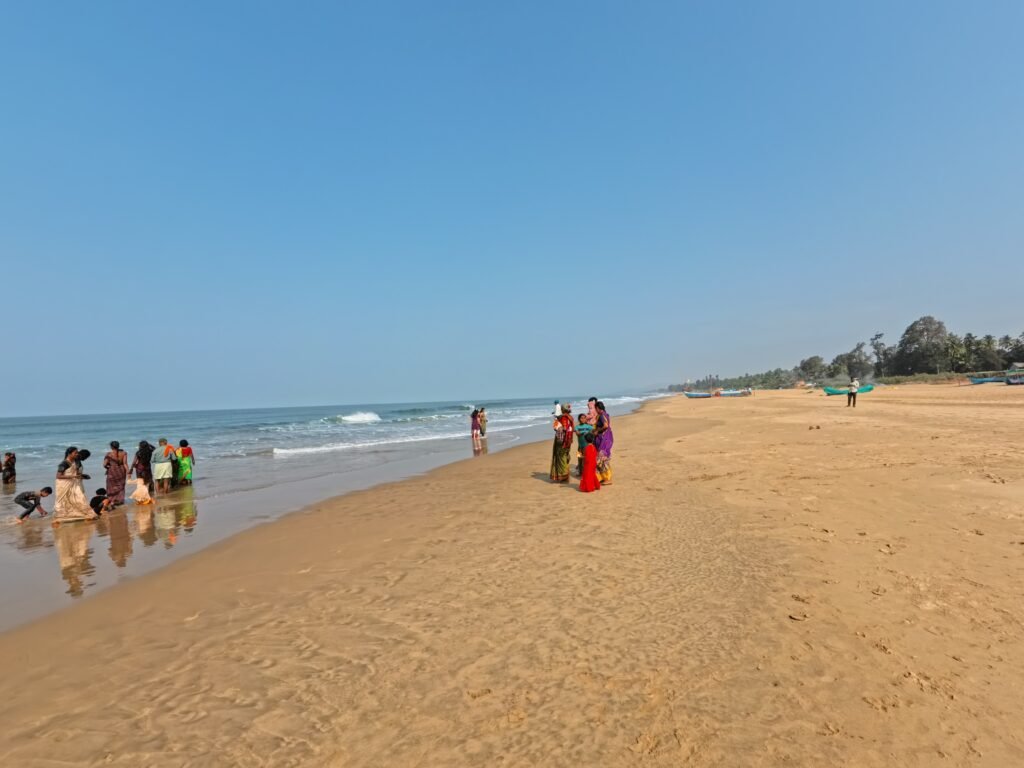
Gokarna is a fishing village on India’s south-western coast, on the shores of the Arabian Sea. It was my last stop after a long pilgrimage journey.
Friends who love Gokarna and know it well told me that ten years ago, there were no proper bathrooms here, nor other signs of conventional comfort. The whole village would begin the morning with a collective physiological ritual along the shore, and the sea would take care of the rest, completing its own ecological cycle.
And yet people fell in love with the place. They were captured by something unspoken, something dissolved in the air.
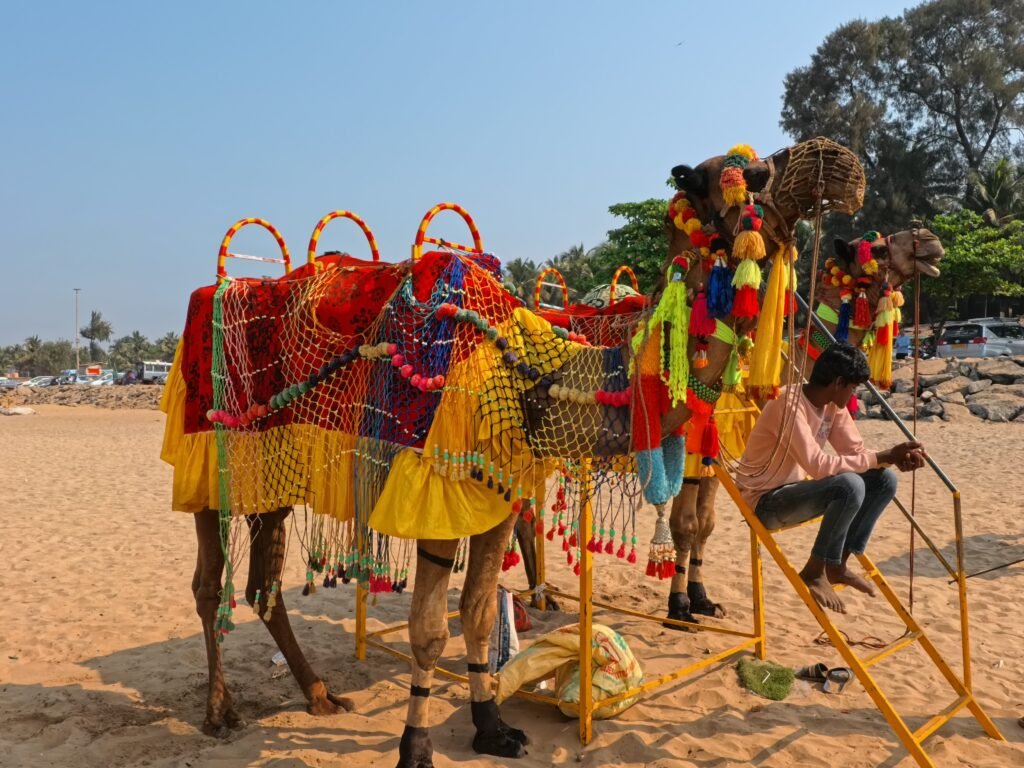
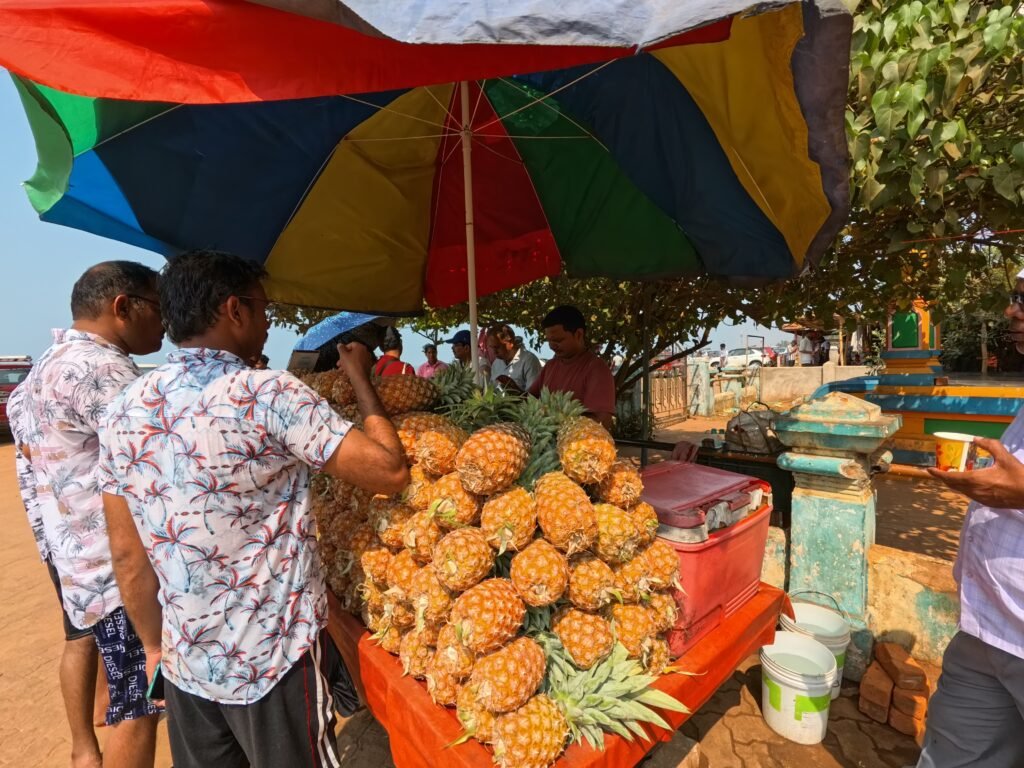
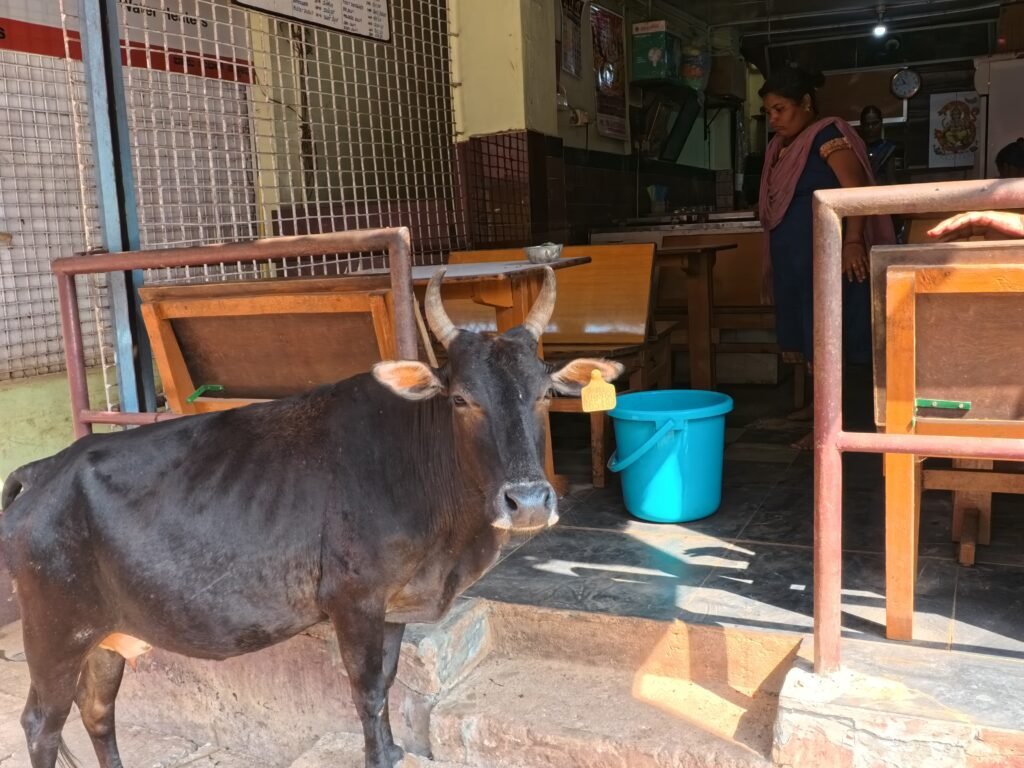
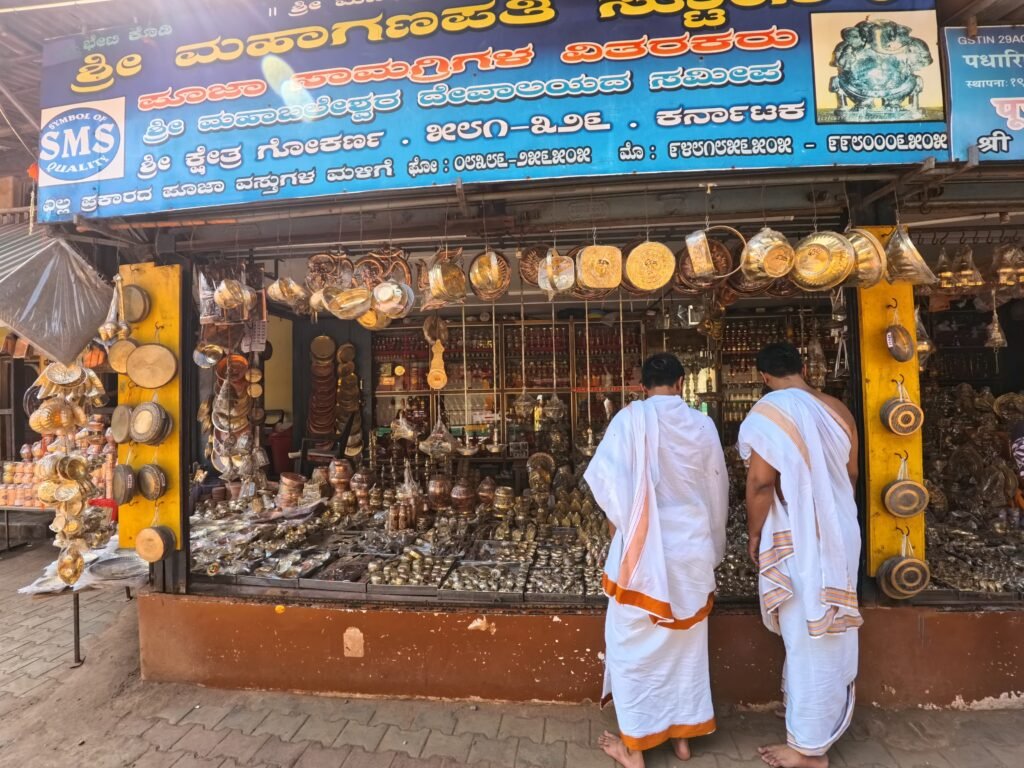
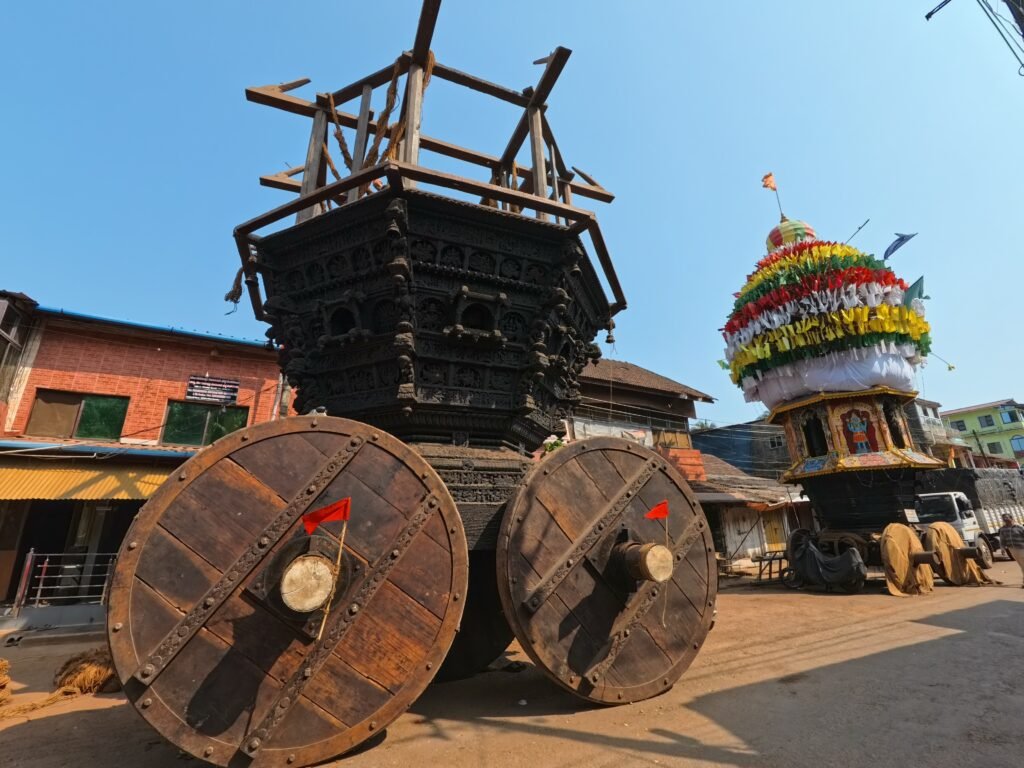
During my short stay, I met travelers from different continents who had been coming here for twenty years — sometimes for extended periods — and who still considered it their paradise.
A Village Between Tradition and Change
The place is deeply connected to Shiva and the sacred lingam kept in its temple, and for many Hindus, it remains an important place of worship. But what I noticed most was the pace.
Even the waves seemed slower, as if someone had slightly reduced the playback speed of the world. After a few days, my own rhythm began to change. Weekdays seemed to disappear. Fixed schedules mattered less. Here, very little was needed. The rest was simply time.
And yet, back to Gokarna itself.
Do not look for five-star hotels. That would probably mean the end of its simple life.
Already on Thursday evenings, couples and groups of Indian friends arrive to spend a long weekend away from the cities. They no longer avoid what used to be considered “Western pleasures” — beer, for instance — something that, I was told, would have been unthinkable here ten years ago, in a place where most residents belong to the Brahmin caste.
People compare it to Goa for its landscape. Still, Gokarna feels more contained, more intimate.
The Rhythm of the Day
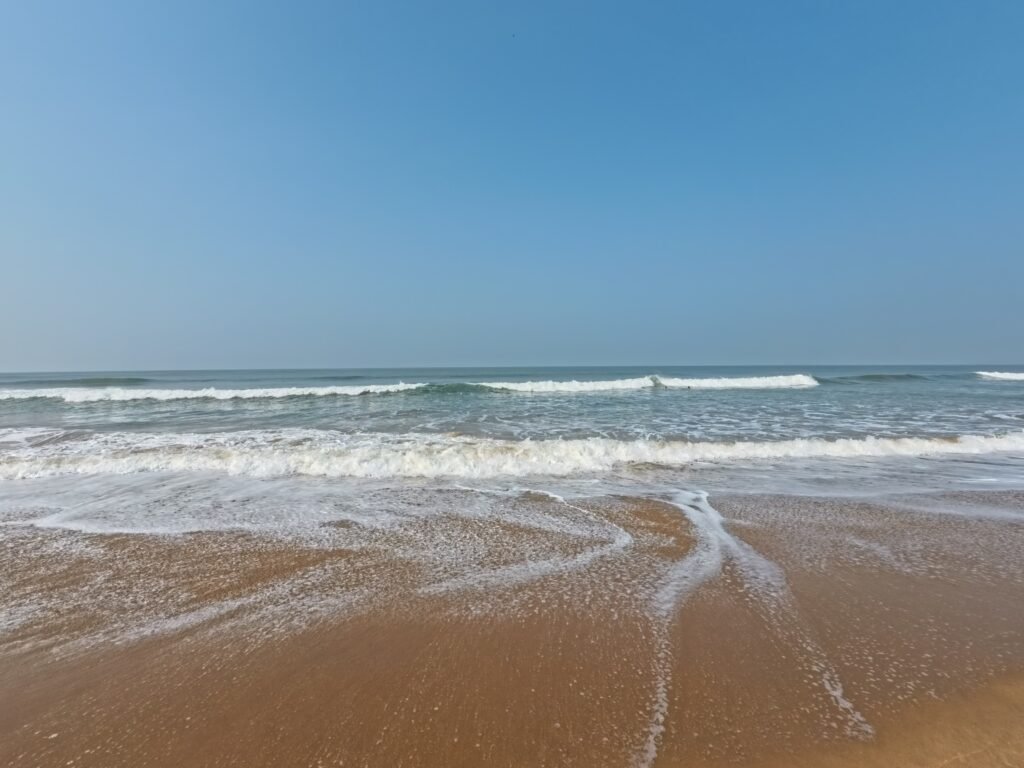
My days followed a simple rhythm: early walks along an almost empty shoreline, a calm breakfast, long swims in warm water. The sea is not Caribbean blue. It is not spectacular. It reveals itself slowly.
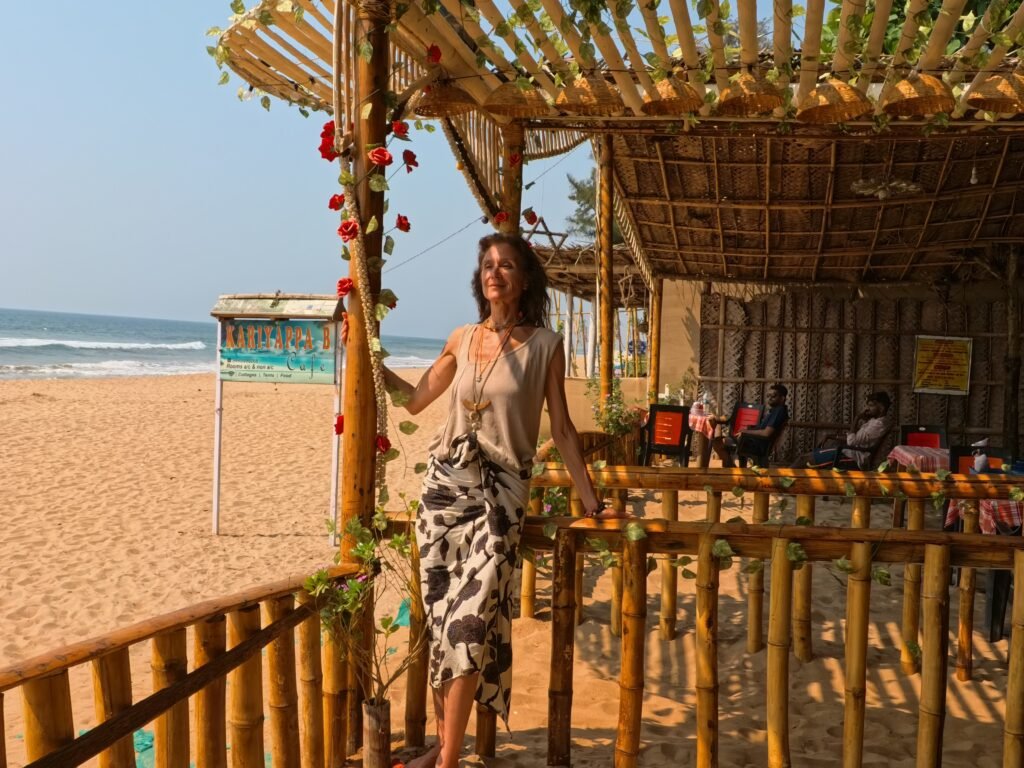
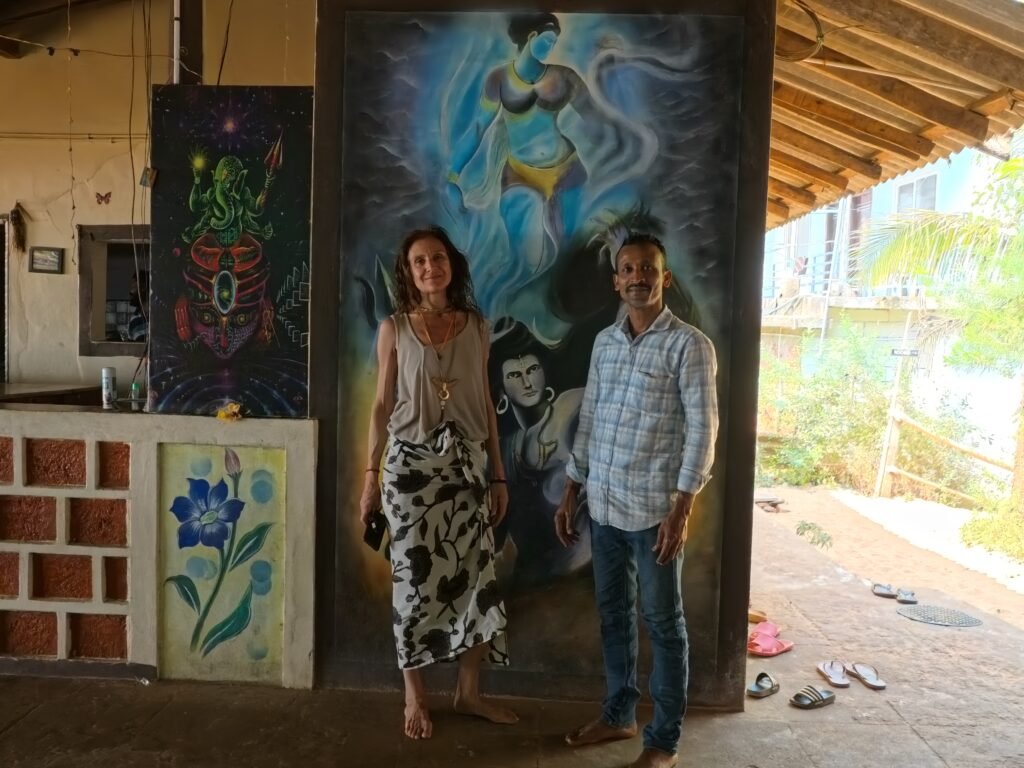
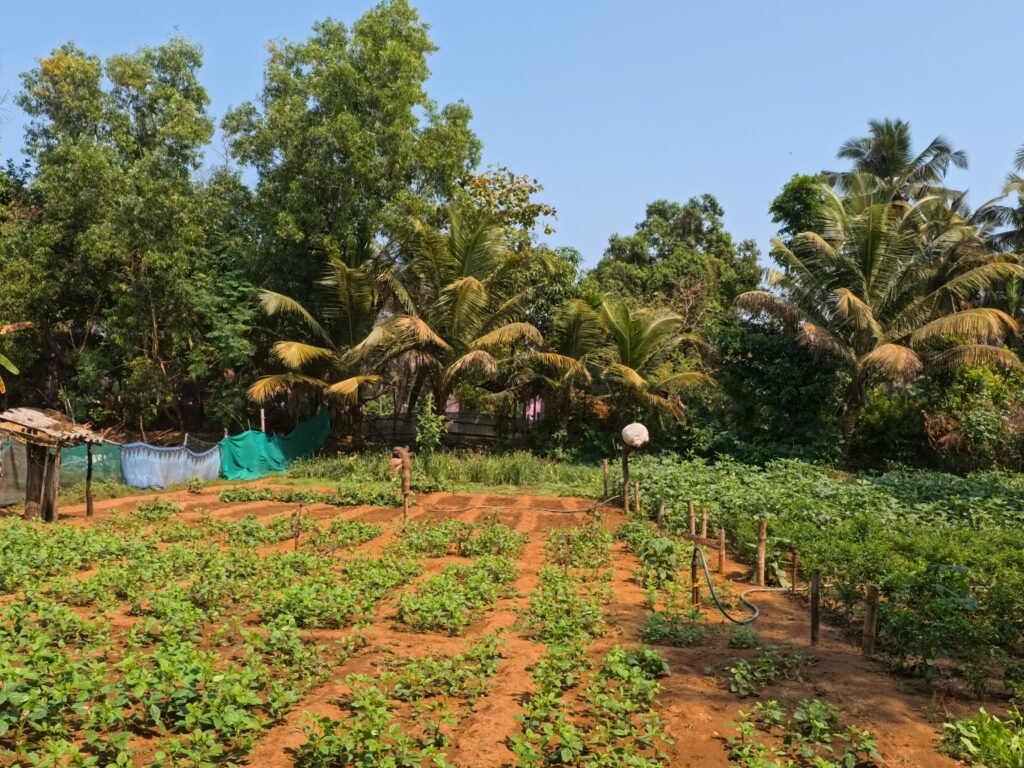
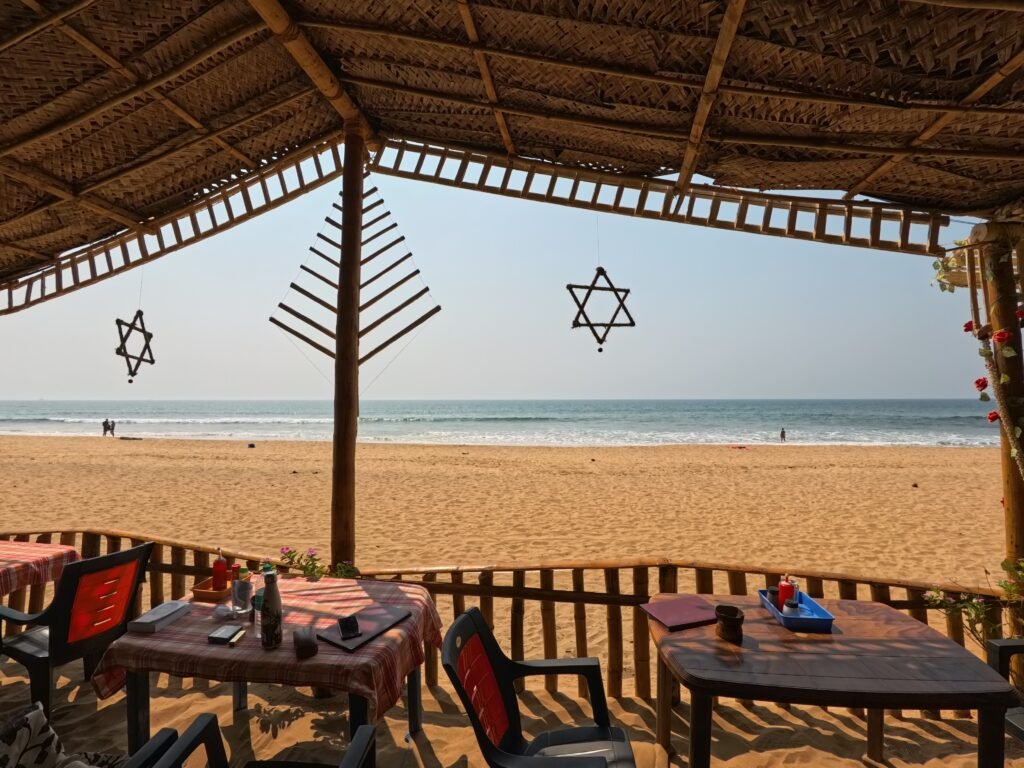
I stayed in a modest beachfront homestay run by Sankar, a Brahmin, and his family. Behind the house, they cultivated a small vegetable garden, and the vegetables went straight to the table. The food was fresh, fragrant, uncomplicated.
In such an atmosphere, postponed projects begin to move. Words that had not yet been written start to take shape.
Another Side of the Village
There is, however, another side. Like much of India, environmental awareness remains limited. Waste is burned in the open air. In the evenings, the smell of smoke drifts through the village. Even while swimming, I sometimes sensed a faint trace of burnt plastic carried by the wind.
It is not an untouched paradise. The beauty here is mixed, imperfect.
If I had to define Gokarna and the people it attracts, I would say it is a quiet blend: aging hippies, partly settled and partly unchanged; travelers who genuinely love India and value its calm, often described as spiritual; and others who have found here an acceptable sea and modest prices.
Life costs little. In seven days, I spent around 130 euros on accommodation and good meals three times a day.
Would I Return?
Would I return? I am not sure. If I had discovered it earlier in life, perhaps my answer would have been different. Now, somewhere in the middle of life’s path, I am less certain.
But I remember a week of dolce far niente — and a place where time slowed down.
Practical Note
Gokarna is located in Karnataka, on the shores of the Arabian Sea in south-western India. The best months to visit are from November to February, when the weather is dry and warm. Simple beachfront homestays remain part of its character, and daily expenses are modest compared to most coastal destinations in India.