
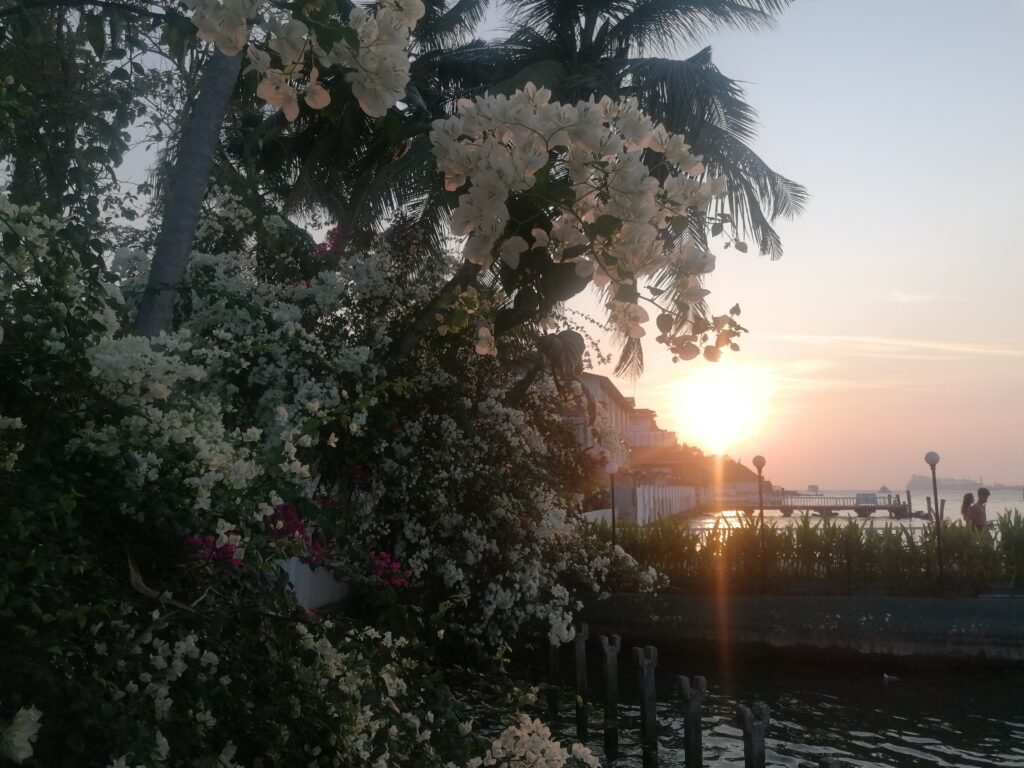
An unexpected encounter in Kerala, India
Fort Kochi, Kerala
I arrived the evening before in Fort Kochi, Kerala — a small town with a rich colonial past along the Malabar Coast. The Portuguese came first, then the Dutch, and finally the British; none of them bypassed this quiet coastal settlement.
Vasco da Gama’s remains once rested here before being returned to Portugal. In St. Francis Church, his tomb still marks that earlier chapter of history.
Three quiet weeks of Ayurvedic treatment in Thrissur had left me lighter than usual, unsure whether I was resting or slowly rearranging something inside.Fort Kochi seemed like nothing more than a brief coastal interlude before my flight north to Rishikesh.
I thought I was simply passing through.
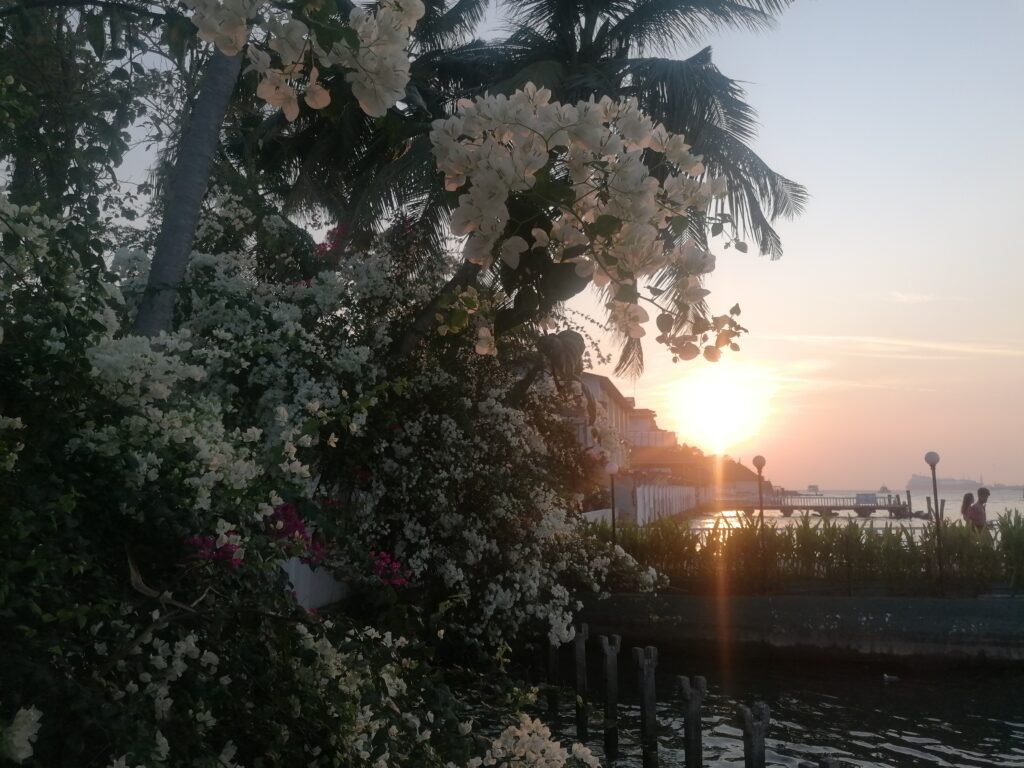
A House on Princess Street
I stayed in a small family-run guesthouse on Princess Street, in the old heart of Fort Kochi. For twenty-three years it had been managed by an unconventional man — a former lawyer in an American corporation — together with his wife and daughter. The house stood in a two-hundred-year-old colonial building, and an article about it had once appeared in National Geographic.
The property opened onto a carefully kept inner courtyard, with a garden and a small pond inhabited by four seven-year-old fish, tended personally and with visible affection by Mr. Walton. A mango tree rose above the greenery; flowers and plants were arranged with attentive care, and a gardener worked there daily.
The house felt like an oasis of order, cleanliness, and comfort — modern air-conditioning, hot water heated by solar energy, and impeccably filtered drinking water served in clear glass bottles were only a small part of what Mr. Walton had thoughtfully conceived and put into place.
A Slow Morning in Fort Kochi
In the morning, breakfast was served in a spacious, well-ventilated dining room. Mr. Walton’s wife moved quietly between the kitchen and the table, offering fruit, coffee, and simple local dishes. A young couple was staying at the house — a French physiotherapist who worked with opera singers, including Russian performers, and her English partner. Conversation drifted easily across languages and professions.
The physiotherapist immediately detected my Russian accent. It was not the first time, during my travels, that someone had pointed it out. Decades earlier, at school, I had been told that my pronunciation carried a trace of British intonation. Apparently, time had softened that distinction. The remark stayed with me longer than I expected.
Later that morning, I walked toward the waterfront to see the famous Chinese fishing nets, installed along the shoreline and still used for catching fish. They moved slowly against the horizon, lifted and lowered by coordinated hands, their rhythm steady and unhurried.
From there, I took a short tuk-tuk ride to the old Jewish quarter to visit the Paradesi Synagogue, the oldest active synagogue in India. It was closed for a holiday, which did not trouble me; the ride from the house took no more than ten minutes.
The weather in Fort Kochi at that time of year was hot and humid. The heat begins in early March and lasts until the monsoon rains arrive toward the end of May. With a little planning, the days remain manageable — air-conditioning and fans indoors, shade during the hottest hours.
Usually, during my travels, I built tight schedules, moving from one place to another without pause. This time, perhaps because of the Panchakarma, I chose to conserve my energy and return to the house.
In the library, which also served as the reception, Mr. Walton was seated at a wooden desk surrounded by books. His daughter Charlotte, who had welcomed me the day before, was there as well.
In the Library
It was there that our conversation quietly deepened. Mr. Walton combined the traits of a lawyer, an intellectual, and a remarkably perceptive psychologist. The conversation began easily, almost of its own accord. We spoke lightly about numerology, psychology, faith, and even the Vatican. He recommended a few books he believed would be useful for building my team. I briefly told him about my project and my travels across India.
At some point, after what felt like a silent assessment, he grew thoughtful and withdrew into a kind of meditative stillness. The pause was long. When he finally spoke, he told me many things about myself — not psychological observations, not polite encouragement, but something that seemed to come from a deeper place of perception.
It reminded me of a previous encounter in Varanasi. Yet with Mr. Walton, everything was different. I had the impression that he was not analyzing me, but somehow reading — as if he had tuned into a channel already open.
Among other things, he mentioned that I would return to India, and that the North — for all its spiritual prestige — did not quite belong to me. There, he said, I would feel like a deer in captivity. The South, particularly Tamil Nadu, would remain part of my path.
He was clear about one more thing: no gurus were necessary, nor intermediaries from ashrams. Such mediation would only complicate what was meant to be direct. What mattered, he suggested, was a direct relationship with God.
I listened without interruption. Much more was said between us that afternoon.
But it belongs to the quiet depths of that book-lined room where our conversation unfolded.
Leaving Fort Kochi
The following evening, I attended a traditional Kathakali performance — Kerala’s classical dance-drama, where painted faces and precise gestures retell ancient epics.
When I returned to the house, Charlotte told me that Mr. Walton had prepared a small gift for me. I was touched by the attention and quiet depth this family extended so naturally.
The next morning, I flew north to Rishikesh for a three-week yoga teacher training. Fort Kochi had been meant as a brief stop, nothing more than a transition between places.
It became something else.
India, once again, had offered more than I had thought to ask for.